

ACMS and the Changing Fire Safety Framework: What Building Owners, Developers and Facility Teams Need to Know
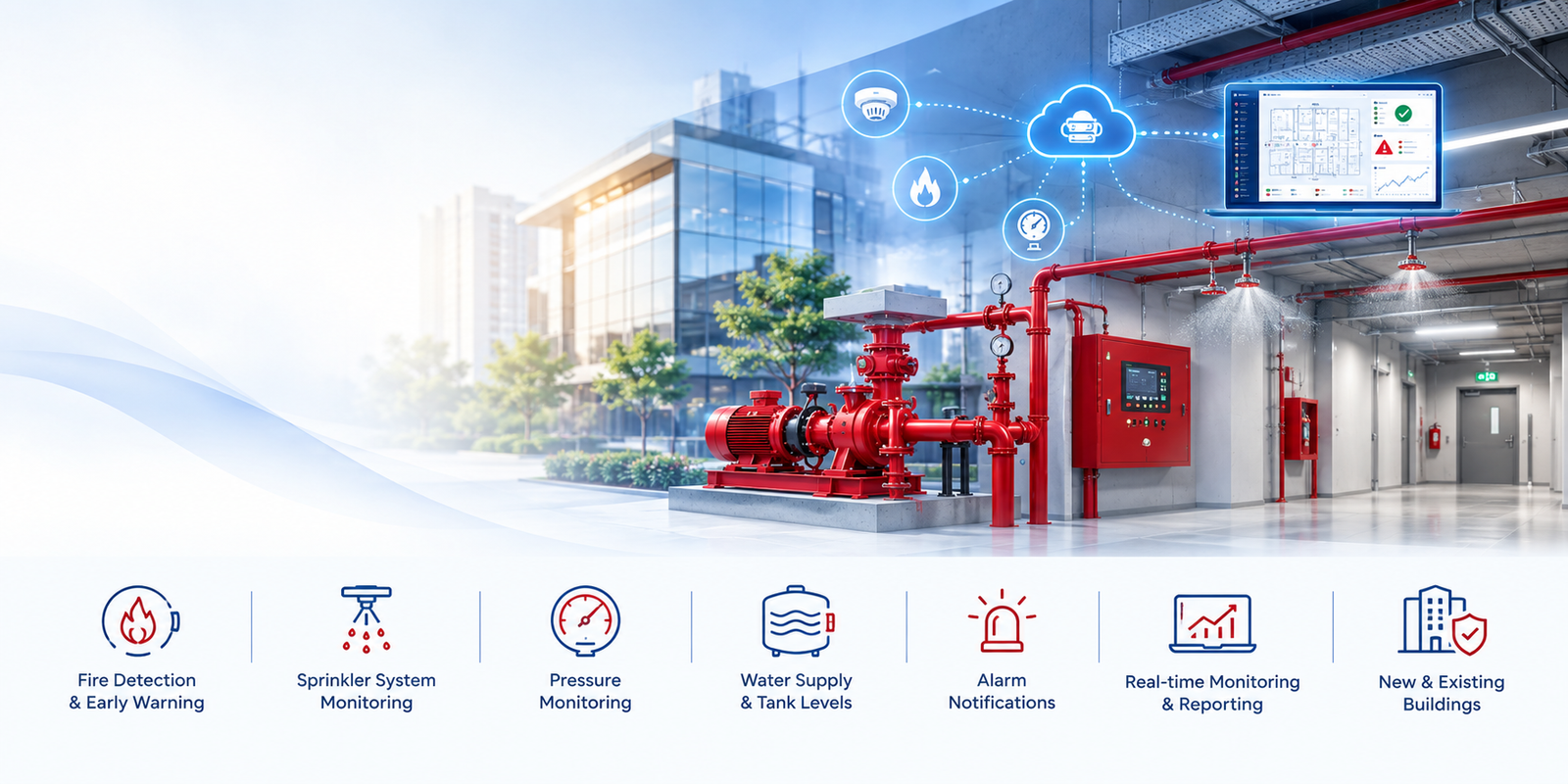
Fire safety regulations are increasingly moving beyond the question of whether a building has the required firefighting and life-safety systems installed.
The more important question is becoming:
How can the operational status and readiness of those systems be continuously verified after installation?
This is where Automated Continuous Monitoring Systems (ACMS) are gaining importance.
Recent regulatory developments in Maharashtra and Delhi indicate a clear movement toward continuous visibility of critical fire prevention and life-safety infrastructure. Maharashtra introduced specific provisions for ACMS through its 2025 amendment to the Maharashtra Fire Prevention and Life Safety Measures Rules, while Delhi’s 2025 amendment to the Delhi Fire Service Rules has now established ACMS within a broader framework covering fire safety auditing, annual declarations and continuous monitoring.
For building owners, developers and facility-management teams, this development is significant because ACMS should no longer be viewed simply as another technology added to a fire protection system. It is becoming part of the way fire safety readiness is continuously managed and demonstrated.
From Installed Fire Protection to Continuous Fire Safety Readiness
A modern building may already have fire pumps, hydrant systems, sprinkler systems, fire water tanks, detection and alarm systems, pressurization systems, public-address systems and other life-safety provisions.
The installation of these systems is essential. But installation does not guarantee that every component will remain operational throughout the life of the building.
A pump may lose power.
A diesel pump may have inadequate fuel.
A fire-water tank may fall below the required level.
A sprinkler riser may experience low pressure.
A fire alarm panel may develop a fault.
A pressurization fan may become unavailable.
A system may remain in an abnormal condition for days without the facility management team having immediate visibility.
This creates a fundamental difference between having a fire safety system and knowing that the system remains ready to perform when required.
ACMS addresses this second requirement.
The regulatory direction therefore represents a shift from a predominantly installation-and-inspection model toward a model in which continuous operational status becomes an important part of fire safety management.
What Has Changed in Maharashtra?
Maharashtra was among the states to formally introduce ACMS into its fire-safety framework.
The Maharashtra Fire Prevention and Life Safety Measures (Amendment) Rules, 2025 inserted Rule 3A, specifying an Automated Continuous Monitoring System for firefighting systems in buildings or parts thereof for the purposes of Section 3(3A) of the Act. The amendment also provides for certification regarding provision of ACMS by a Licensed Agency through Form A-1.
The Maharashtra framework specifies that the ACMS is to be IoT-based and addresses the continuous monitoring of fire-protection infrastructure. The underlying objective is not simply to create another dashboard, but to help ensure that firefighting systems remain in good repair and efficient working condition.
The Maharashtra Fire & Emergency Services continues to publish the amended Act and Rules through its official regulatory resources.
For organizations operating covered buildings in Maharashtra, the practical implication is important:
ACMS needs to be considered as part of the fire-safety compliance and operational-readiness framework, rather than as an optional monitoring gadget added after everything else is complete.
Delhi Takes the Concept Further
The recent Delhi Fire Service (Amendment) Rules, 2025 provide another important development.
The Delhi notification was issued on 26 May 2026. The amendments relating to Rules 34, 35, 36, 37 and 38, along with the First and Seventh Schedules, are specified to come into force 90 days after publication in the Official Gazette.
Under the amended Rule 37, an Automated Continuous Monitoring System for fire prevention and fire safety measures, or part thereof, is to be provided by the owner or occupier for the classes of occupancies identified in the rules and Seventh Schedule. The rule also states that ACMS must comply with technical standards and cybersecurity protocols as may be notified by the Director.
This is an important distinction.
Delhi’s framework does not describe ACMS merely as a device for monitoring fire pumps. The Seventh Schedule describes an IoT-based system covering Active and Passive Measures, with the objective of ensuring that fire prevention and life-safety measures remain in good repair and efficient working condition.
What Does Delhi’s ACMS Framework Actually Envision?
The Delhi framework provides a useful indication of the direction in which continuous fire-safety monitoring is moving.
The ACMS architecture is intended to collect system-status information through an IoT Gateway and upload the information to a cloud server. The resulting system health information is intended to reach the owner or occupier and the system installer through email, SMS or a suitable mobile application.
The specified monitoring includes areas such as:
- Main and standby hydrant pump status
- Diesel tank level
- Power availability to pumps
- Hydrant riser pressure
- Jockey and booster pump status
- Fire-water tank levels
- Sprinkler pump status
- Sprinkler riser pressure
- Fire detection system status
- Fire alarm control/repeater panel status
- Fire alarm battery status
- Manual call point status
- Public-address system status
- Staircase and other pressurization fan status
The important point is not the individual parameter list. It is the architecture behind it: multiple fire-safety subsystems are brought into a continuous operational-status layer rather than being considered independently.
ACMS Is Not a Replacement for Fire Safety Systems
This distinction is important for both building owners and technology providers.
ACMS does not replace:
- Fire pumps
- Hydrant and sprinkler systems
- Fire-water storage
- Fire detection and alarm systems
- Fire extinguishers
- Fire doors and compartmentation
- Smoke management systems
- Pressurization systems
- Public-address systems
- Emergency power systems
- Inspection and testing
- Preventive maintenance
- Statutory fire safety audits
Instead, ACMS provides a continuous monitoring and readiness layer around the infrastructure that already performs these functions.
In practical terms:
- Fire protection infrastructure performs the safety function.
- ACMS provides continuous visibility of its operational status.
- Maintenance teams act on abnormal conditions.
- Fire Safety Auditors independently verify compliance where the applicable regulatory framework requires them to do so.
This distinction becomes particularly important under the new Delhi framework.
ACMS and Fire Safety Auditing Are Different Roles
One of the most significant aspects of the Delhi amendment is the formal definition and role of the Fire Safety Auditor. The amended rules define a Fire Safety Auditor as a third party duly empaneled with the Director, Delhi Fire Service. The auditor’s responsibilities extend well beyond checking whether an ACMS dashboard is online.
The amended framework provides for inspection and certification covering fire prevention and fire safety measures. Form J, for example, includes items such as access, exits, fire doors, pressurization, compartmentation, smoke management, extinguishers, hose reels, automatic detection and alarm systems, public-address systems and other fire-safety provisions.
Therefore:
ACMS implementation and Fire Safety Auditing should not be treated as the same service.
A technology company may design, supply, install, integrate and maintain an ACMS without becoming the statutory Fire Safety Auditor. Conversely, being a Fire Safety Auditor does not mean that the auditor is automatically the ACMS system provider.
There is also an important conflict-of-interest provision in the Delhi rules:
A Fire Safety Auditor cannot audit a building for which the auditor or the auditor’s firm has provided design, consultancy, installation or maintenance services.
This separation is important because it preserves the independence of the audit function.
What This Means for New Buildings
For a new building, ACMS should ideally be considered during the fire-safety system design stage, rather than after commissioning. This allows the monitoring architecture to be developed alongside the fire protection infrastructure.
For example, when the fire protection design includes:
Fire pumps → tanks → hydrants → sprinklers → detection → alarm → pressurization → emergency communication
the design team can simultaneously consider:
- What status needs to be monitored?
- Where should the status signal originate?
- How will it reach the monitoring gateway?
- Who should receive the alarm?
- What constitutes a critical condition?
- What happens when communication fails?
- How will the system be maintained after handover?
This approach avoids treating ACMS as an afterthought.
It can also reduce the need for expensive modifications later because appropriate sensing, interfaces, communication infrastructure and panel provisions can be incorporated during the original project.
For developers, architects, MEP consultants and fire-safety consultants, this creates an opportunity to consider continuous readiness as part of the building’s fire-safety architecture from the beginning.
What This Means for Existing Buildings
Existing buildings present a different engineering challenge.
The fire protection infrastructure may have been installed many years ago, with different manufacturers, control panels, pumps and local indication systems.
In such buildings, ACMS implementation may involve:
- Reviewing the existing fire-safety infrastructure
- Identifying critical status points
- Assessing available electrical and communication interfaces
- Adding appropriate sensors or interface modules
- Connecting existing equipment to monitoring gateways
- Establishing communication and cloud infrastructure
- Configuring alerts and escalation
- Testing each monitored parameter
- Creating maintenance and response procedures
The objective should not be to replace functioning fire-safety infrastructure unnecessarily.
Instead, the implementation should first determine what already exists, what information is already available, what needs to be sensed independently, and what can be integrated safely with the existing systems.
This makes ACMS relevant not only to new construction but also to operational buildings seeking better visibility of their existing fire-safety infrastructure.
The Owner or Occupier Remains Central
Another important implication of the new regulatory approach is that continuous monitoring does not transfer responsibility for fire safety away from the building owner or occupier.
The Delhi rules explicitly place provision of ACMS under the owner/occupier for the specified occupancies.
The framework also retains the importance of annual declarations and continued maintenance of fire-safety arrangements. The amended Delhi rules provide for annual Form K submission and state that the Fire Safety Certificate remains valid subject to the prescribed conditions and annual declaration.
This means ACMS should be understood as an operational management tool supporting the owner’s continuing fire-safety responsibility, not as a mechanism that transfers that responsibility to the technology provider.
From Alarm Generation to Corrective Action
Installing sensors and displaying status on a dashboard is only the beginning. The real value of continuous monitoring appears when an abnormal condition produces a defined maintenance response.
Consider a simple example. If the monitoring system reports:
Hydrant Pump Power — OFF
the useful question is not merely whether the dashboard has generated an alert.
The facility team needs to know:
- Is the power supply actually unavailable?
- Has a breaker tripped?
- Is the pump controller healthy?
- Is maintenance required?
- Who is responsible for responding?
- How quickly should the condition be rectified?
- Has the corrective action been recorded?
The same principle applies to low tank levels, pump failures, low pressure, alarm-panel faults and other monitored conditions.
Therefore, a mature ACMS implementation should connect:
Status → Alert → Acknowledgement → Investigation → Corrective Action → Closure → Record
This transforms continuous monitoring from a passive dashboard into a practical maintenance and readiness process.
ACMS Should Be Designed Around the Building, Not Just the Technology
There is no value in monitoring dozens of parameters if nobody acts on the information. A good implementation therefore begins with the building’s fire-safety architecture and operational requirements.
A practical assessment should consider:
| Area | Key consideration |
|---|---|
| Fire pumps | What operating and power-status information is required? |
| Water storage | How will critical tank levels be monitored? |
| Hydrant/sprinkler network | Which pressure conditions require attention? |
| Fire detection | What panel and system-health information is available? |
| Emergency communication | What constitutes a system-health failure? |
| Pressurization | Which fans and operating conditions require monitoring? |
| Communication | How will remote buildings or multiple blocks connect? |
| Alerts | Who receives which type of alarm? |
| Maintenance | Who investigates and closes an abnormal condition? |
| Records | How will events and corrective actions be documented? |
This is why ACMS implementation is fundamentally an engineering and integration exercise, not simply a matter of installing IoT sensors.
A Different Procurement Question for Building Owners
As ACMS becomes part of the fire-safety conversation, procurement teams will increasingly encounter vendors offering different types of monitoring systems.
The right question should not simply be: “What is the cost of the ACMS?”
A better evaluation should include:
- Which fire-safety systems will actually be monitored?
- Are existing systems being integrated or replaced?
- Which parameters are directly sensed?
- Which statuses are obtained from existing controllers?
- How are critical alarms differentiated from routine notifications?
- What happens if communication fails?
- How is the system secured?
- What happens to historical data?
- Who receives alerts?
- What is the response procedure?
- How is commissioning verified?
- Who maintains the monitoring system?
- How will future regulatory requirements be accommodated?
This approach helps avoid purchasing a dashboard that provides information without creating meaningful operational readiness.
The Role of the ACMS Implementation Partner
The emergence of ACMS also creates a distinct role between the building owner and the statutory fire-safety framework. An implementation partner can support activities such as:
Assessment → System Architecture → Engineering → Supply → Installation → Integration → Commissioning → Monitoring → Maintenance
The statutory role remains separate. In Delhi, for example, the Fire Safety Auditor operates within the prescribed empanelment and certification framework, while the ACMS itself is provided for the owner or occupier in accordance with the applicable requirements. The rules also specifically prevent an auditor from auditing a building where the auditor or the auditor’s firm has provided design, consultancy, installation or maintenance services.
This creates a clear basis for collaboration:
Building Owner / Developer
↓
ACMS Implementation Partner
Designs, supplies, integrates and maintains the monitoring system
↓
Fire Safety Infrastructure
Pumps, tanks, hydrants, sprinklers, detection, alarm, pressurization and related systems
↓
Independent Fire Safety Auditor
Performs the applicable statutory inspection/certification function
The precise responsibilities will depend on the applicable state regulations, building category and project requirements.
What Developers and Facility Teams Should Do Now
For a new building, the practical priority is to include ACMS considerations during fire-safety and MEP design. For an existing building, the first step should be a fire-system monitoring assessment, not immediate installation.
The assessment should establish:
- What fire-safety systems are installed?
- What equipment is currently operational?
- Which parameters are already available electronically?
- Which parameters require additional sensing?
- What communication infrastructure is available?
- Which conditions are critical?
- Who needs to receive each alert?
- What maintenance response is required?
- What records should be maintained?
- What regulatory requirements apply to the particular building?
Only after this assessment should the monitoring architecture and bill of materials be finalized.
A Broader Shift in Fire Safety Management
The significance of ACMS is therefore larger than the technology itself. For decades, fire safety management has depended heavily on three activities:
Install → Inspect → Maintain
Continuous monitoring introduces another operational layer:
Install → Monitor → Detect → Respond → Maintain → Verify
The objective is not to eliminate inspections or maintenance. It is to reduce the period during which a critical fire-safety system can remain in an abnormal condition without the responsible team knowing about it.
That is particularly relevant for large buildings, industrial facilities, commercial complexes, hospitals, institutions, warehouses, hotels and multi-building campuses where critical fire infrastructure may be distributed across a large physical area.
From Compliance Infrastructure to Readiness Infrastructure
The regulatory developments in Maharashtra and Delhi point toward an important evolution in fire-safety management. Fire protection systems will continue to be the physical infrastructure that protects people, property and business operations. Fire safety audits will continue to provide an independent mechanism for inspection and verification where required.
Preventive maintenance will remain essential. But between these activities lies an important operational requirement:
continuous visibility of the condition and readiness of critical fire-safety infrastructure.
That is the role ACMS is increasingly being positioned to perform. For new buildings, this means considering continuous monitoring as part of the fire-safety architecture from the design stage. For existing buildings, it means assessing how the installed fire-safety infrastructure can be connected to a practical monitoring and response layer. And for building owners and facility teams, it means moving toward a more proactive question:
Not simply “Is the fire system installed and inspected?” but “Do we continuously know whether the critical fire-safety infrastructure is ready to perform?”
That shift—from periodic verification toward continuous operational visibility—is likely to become an increasingly important part of modern fire-safety management.
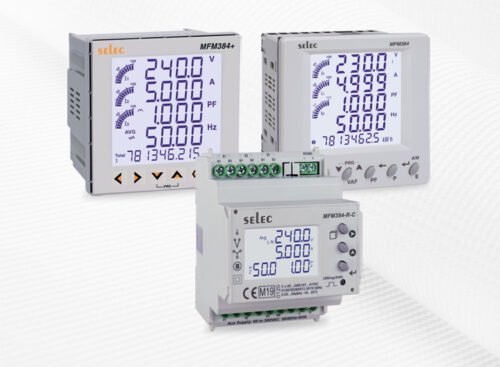 Digital Multifunction Meter