

Electrical Anomaly Monitoring: Proactive Detection and Prevention of Electrical Fire Risk
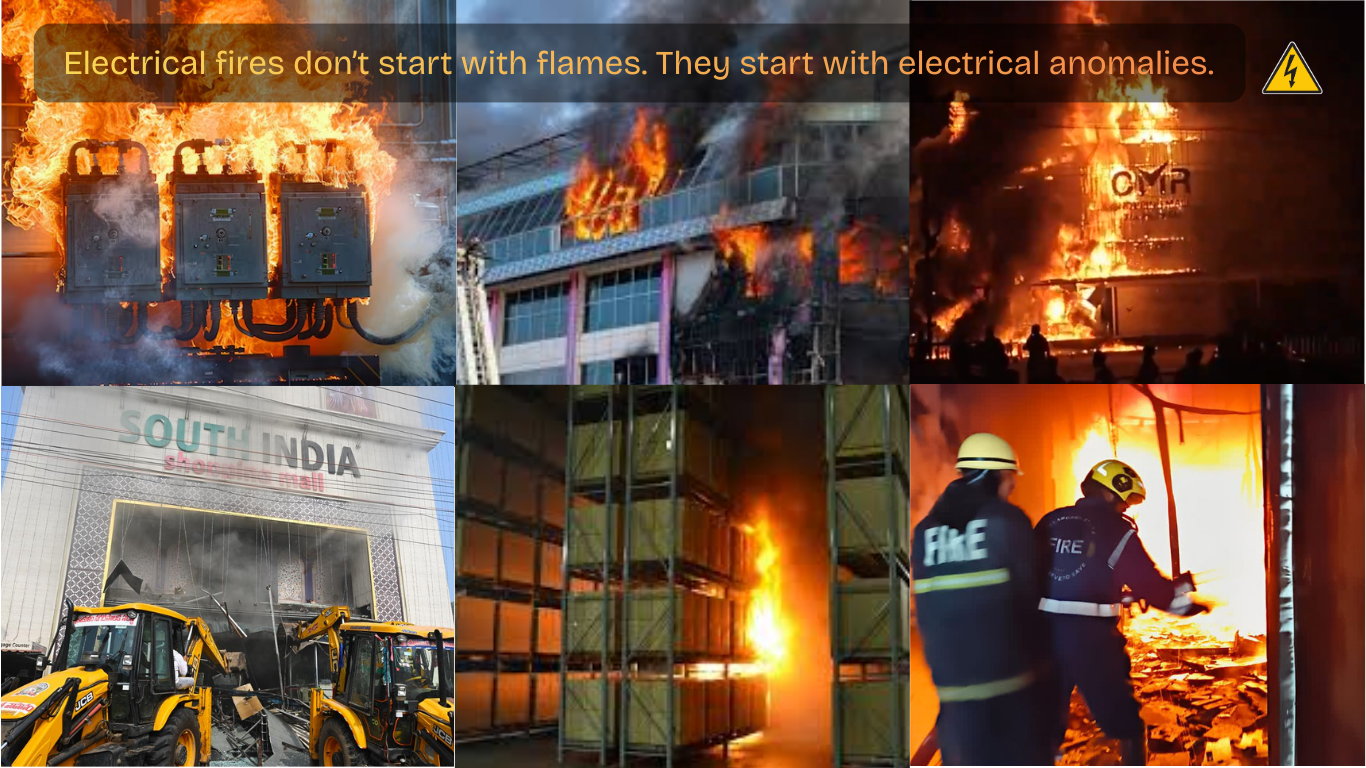
Electrical fires rarely begin with a dramatic fault event. They begin quietly.
Long before insulation burns or smoke becomes visible, electrical systems often experience subtle deviations from their engineered operating state. These deviations may not interrupt operations. They may not trip breakers. They may not trigger alarms. Yet they represent measurable instability within the network.
In modern facilities—whether industrial plants, commercial complexes, healthcare institutions, or data-driven environments—electrical systems operate under increasing load complexity. Nonlinear loads, automation systems, distributed energy inputs, and dynamic usage cycles introduce electrical behaviour that is far more variable than traditional infrastructure was designed to accommodate.
Electrical anomaly monitoring addresses this invisible phase.
Instead of waiting for catastrophic thresholds to be crossed, anomaly monitoring focuses on identifying departures from electrical stability while systems are still operational. It converts electrical behaviour into structured intelligence, enabling intervention before instability escalates into fire risk.
For EHS leaders and fire safety professionals, this represents a shift from reactive response to proactive governance.
Why Electrical Fire Risk Persists Despite Existing Safety Systems
Most facilities already have multiple layers of electrical protection. Circuit breakers, protective relays, residual current devices, surge protection systems, and thermal detection mechanisms are standard components of modern installations.
These systems are essential—and effective. However, they are fundamentally designed to respond to defined fault events. Protection devices activate when thresholds are exceeded:
- Short circuits producing sudden high current
- Severe overload conditions
- Ground faults
- Arc faults exceeding detection limits
- Insulation breakdown triggering residual current imbalance
These events represent clear fault states.
The challenge is that electrical fire risk often develops before such fault conditions occur. Electrical systems can operate within trip limits while still experiencing instability. Protection devices remain inactive because their threshold criteria have not been breached. This creates a structural blind spot.
Between stable operation and catastrophic fault lies a spectrum of deviation. It is within this intermediate zone that electrical stress accumulates. Over time, such stress can weaken insulation, strain conductors, overheat neutral paths, or create localized instability that increases ignition probability.
Traditional protection is event-driven. Electrical anomaly monitoring is deviation-driven. This difference defines its preventive value.
Understanding Electrical Instability in Modern Infrastructure
Electrical installations are engineered with defined operating parameters. During system design, engineers establish tolerances for voltage variation, phase balance, harmonic distortion, and neutral loading. These tolerances define the stability envelope within which the system is intended to operate safely.
However, infrastructure rarely remains static. Over time, facilities evolve:
- Additional equipment is installed.
- Nonlinear loads increase.
- Operational schedules become more dynamic.
- Energy-efficient devices with power electronics proliferate.
- Load distribution shifts unevenly across phases.
These changes introduce complexity that may not be fully reflected in the original design assumptions. Common forms of emerging instability include:
- Increasing harmonic distortion due to variable frequency drives and switching power supplies
- Phase imbalance caused by uneven load expansion
- Neutral conductor stress from harmonic components
- Abnormal current fluctuation during load cycling
- Voltage deviations linked to distribution stress
Individually, these conditions may not constitute immediate danger. Collectively, and over time, they alter the electrical behavior profile of the facility. Without continuous visibility, such shifts remain unmeasured.
Engineering-Based Anomaly Detection – A Structured Approach to Prevention
Engineering-based anomaly detection does not rely on generic alarm limits. It is grounded in system-specific tolerances derived from electrical design principles. The approach begins with continuous monitoring of core electrical parameters. These typically include:
- Voltage magnitude and variation patterns
- Current magnitude and fluctuation trends
- Harmonic distortion levels
- Phase relationship balance
- Frequency stability
- Neutral displacement or irregularity
- Leakage current variation
Rather than simply logging data, anomaly monitoring evaluates these measurements against predefined tolerance thresholds aligned with engineered expectations. The system identifies two primary categories of deviation:
- Magnitude exceedance – When a parameter crosses acceptable tolerance levels.
- Behavioural irregularity – When patterns emerge that indicate abnormal fluctuation, repetition, or trend escalation even if magnitude limits are not yet breached.
For example, a gradual rise in total harmonic distortion over several weeks may not immediately exceed protection thresholds. However, if the increase represents a clear departure from historical stability patterns, the system logs an anomaly event.
Similarly, recurring phase imbalance events—even within nominal limits—may signal distribution inefficiency that warrants inspection. This structured evaluation transforms monitoring from passive observation into preventive intelligence.
From Fault Protection to Deviation Intelligence
Electrical protection philosophy has historically focused on interruption. Its goal is to isolate faulted circuits and prevent equipment damage or escalation. Deviation intelligence complements this philosophy. Instead of reacting only to severe events, anomaly monitoring observes electrical quality continuously during normal operation. It detects when the system begins drifting from balanced, harmonically compliant, and stable behavior.
This layered approach creates a progression model:
- Stable operation within engineered tolerances
- Emerging deviation events logged for review
- Preventive intervention based on anomaly frequency or severity
- Fault interruption as the final safeguard
By introducing a monitoring layer before fault thresholds are crossed, facilities reduce the likelihood of emergency conditions. For O&M teams, this translates into early inspection opportunities rather than reactive repairs. For EHS managers, it means fire risk management begins at the electrical parameter level—not at combustion.
Electrical Anomaly Events as Leading Risk Indicators
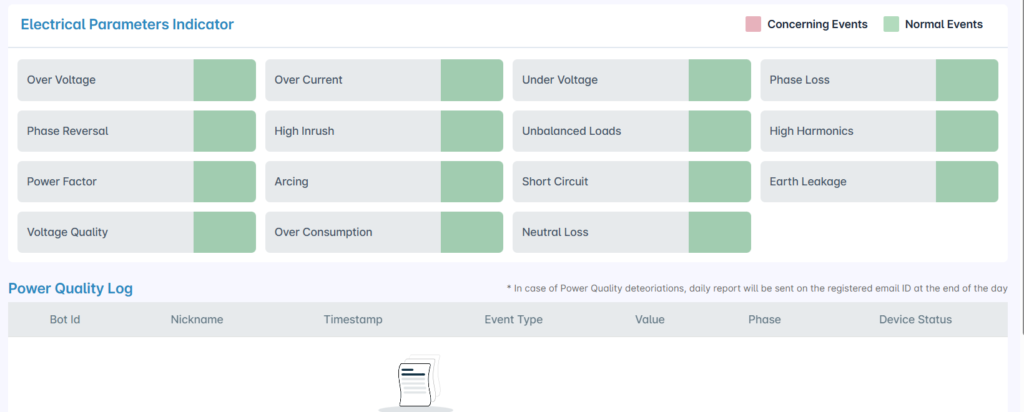
Every anomaly event represents a measurable departure from engineered stability. Individually, an event may appear minor. However, when analyzed collectively, these events reveal systemic trends. Repetition matters. Frequency matters. Escalation patterns matter.
Key leading indicators may include:
- Recurrent harmonic exceedance over specific feeders
- Progressive increase in phase imbalance events
- Persistent neutral irregularity
- Repeated abnormal current fluctuation during operational peaks
These patterns do not automatically predict fire. They indicate stress accumulation. For EHS professionals, anomaly logs provide documented evidence of electrical deviation. This supports:
- Risk register updates
- Audit documentation
- Structured preventive action tracking
- Data-backed safety reporting
For O&M personnel, anomaly trends assist in prioritizing inspection resources. Panels or feeders with higher deviation density can be reviewed before deterioration progresses. Anomaly events thus serve as early warning markers within electrical safety governance frameworks.
Integration into EHS and Electrical Fire Risk Governance
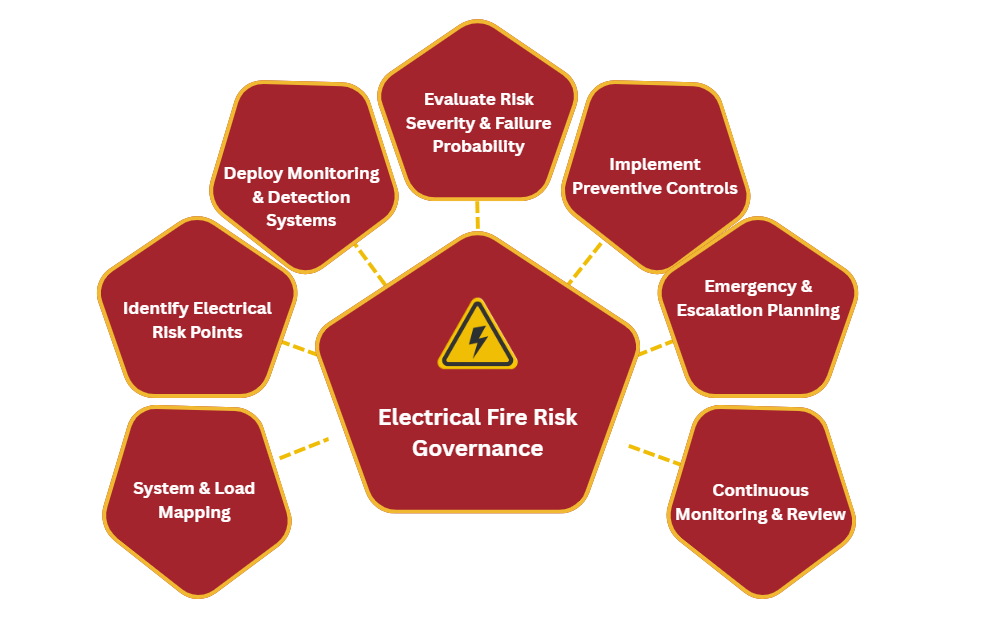
Fire safety governance traditionally focuses on detection, suppression, and evacuation protocols. Electrical anomaly monitoring introduces an upstream control layer. Instead of responding to ignition, organizations can monitor electrical stability as a formal safety metric.
Integration may include:
- Periodic review of anomaly event reports during EHS meetings
- Escalation criteria based on deviation frequency thresholds
- Alignment with preventive maintenance schedules
- Documentation of corrective actions linked to specific anomaly logs
By embedding electrical stability metrics into governance processes, facilities shift from reactive compliance to proactive oversight. This strengthens audit defensibility and enhances transparency in risk management. Electrical safety becomes measurable, documented, and continuously evaluated.
Operational Impact and Maintenance Strategy
Unexpected electrical incidents disrupt operations, damage assets, and create financial exposure. While protection devices mitigate catastrophic events, anomaly monitoring reduces the probability of reaching such conditions.
When deviation is identified early:
- Load redistribution can be planned rather than urgent
- Harmonic mitigation strategies can be evaluated
- Connections can be inspected before overheating occurs
- Capacity upgrades can be scheduled proactively
This reduces emergency downtime and unplanned maintenance. From an operational perspective, anomaly monitoring enhances predictability. Maintenance becomes intelligence-driven rather than calendar-driven alone. The result is a more resilient electrical infrastructure.
Infrastructure Modernization and Growing Electrical Stress
Urbanization, digitalization, and electrification are accelerating infrastructure stress globally. Buildings designed decades ago now support far greater electrical density. Data centers, automation systems, EV charging infrastructure, renewable integration, and smart building technologies have transformed load profiles.
This evolution introduces:
- Higher harmonic content
- Increased nonlinear load penetration
- Dynamic load cycling
- Greater neutral conductor stress
- More complex phase distribution challenges
Protection systems remain calibrated for fault thresholds. However, underlying electrical behavior may shift progressively. Anomaly monitoring provides continuous oversight within this evolving environment. It ensures modernization does not silently erode system stability. As infrastructure complexity increases, upstream visibility becomes not optional—but necessary.
Risk Management and Financial Perspective
Electrical fire incidents carry broad consequences:
- Asset damage
- Business interruption
- Insurance exposure
- Regulatory scrutiny
- Reputational impact
While no system can eliminate all risk, reducing uncertainty improves risk posture. Anomaly monitoring reduces blind spots. It provides data that supports early intervention, improving both safety and financial resilience. From a governance perspective, demonstrating proactive electrical monitoring strengthens organizational accountability. It shows that fire risk is being addressed at its technical origin.
Making Electrical Stability a Preventive Control Layer
Electrical fires rarely emerge without prior instability. The progression from deviation to failure may be gradual, but it is often measurable. Protection systems remain indispensable. However, they operate at the end of the risk spectrum. Engineering-based anomaly monitoring operates at the beginning.
By continuously evaluating voltage, current, harmonic behavior, phase balance, and neutral stability against defined tolerances, facilities gain structured visibility into emerging electrical stress.
This transforms electrical behavior into actionable intelligence. For EHS leaders, fire safety professionals, and O&M teams, anomaly monitoring represents more than a technical enhancement. It establishes electrical stability as a formal preventive control layer within modern risk governance.
Prevention does not begin with extinguishing flames.
It begins with identifying deviation—before ignition becomes possible.
Electrical anomaly monitoring operationalizes that principle, bringing discipline, visibility, and foresight to electrical fire risk management.
~ Wish to learn more about the solution and discuss similar challenges at your facility, please feel free to connect Intelliware team:
- Call/SMS/WhatsApp: +91 8279921905
- email: contactus@intelliware.in
- Facebook: https://www.facebook.com/intelliware.in
- LinkedIn: https://linkedin.com/company/intelliware-in