

Electrical Anomalies and Fire Risk: Strengthening Safety Governance Through Real-time Visibility
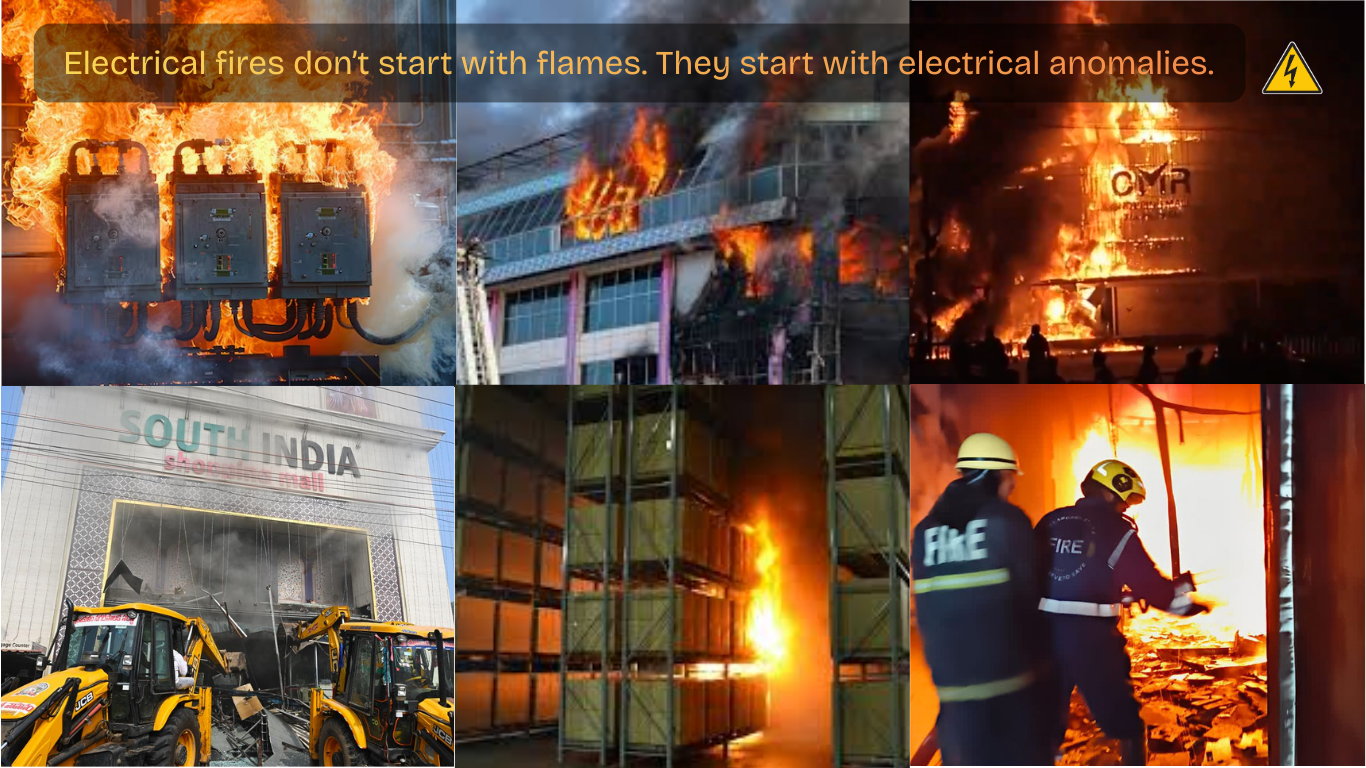
Electrical fires do not erupt without warning. They are the culmination of a definable progression – a sequence of electrical deviations that intensify over time until ignition thresholds are crossed. The physics behind this progression is neither mysterious nor random. It is governed by measurable parameters: current flow, insulation resistance, harmonic distortion, thermal buildup, and system imbalance.
For EHS and Fire & Safety professionals, this distinction is fundamental. Fire prevention has historically been structured around detection and suppression. Yet detection identifies combustion after it begins, and suppression responds after escalation. The strategic shift required today is upstream: toward monitoring the electrical conditions that precede ignition.
As electrical infrastructure grows more complex — particularly in high-density urban environments and rapidly expanding economies such as India — the integration of electrical health into safety governance is no longer optional. It is a structural necessity.
The Evolving Electrical Risk Landscape
Modern buildings are no longer passive electrical consumers. They are dynamic, continuously fluctuating energy ecosystems. Load profiles shift hourly and seasonally. Equipment density increases annually. Electrification initiatives, digital infrastructure expansion, and climate-control demands intensify stress on distribution systems.
Several structural trends are reshaping electrical behavior:
- Rapid growth in connected equipment and plug loads
- Electrification of transport through EV charging infrastructure
- Expansion of server rooms and data-intensive operations
- Increased HVAC cycling due to climate variability
- Integration of renewable energy sources and inverters
- Aging legacy panels operating beyond original design margins
In India, additional complexity arises from retrofitted infrastructure, mixed-occupancy buildings, informal load additions, and climatic extremes that strain insulation systems. Globally, electrical malfunction remains one of the leading contributors to structural fire incidents across commercial and industrial sectors.
Despite this, fire governance frameworks remain disproportionately focused on response systems rather than electrical precursors.
Electrical fire risk is not merely a function of fault events. It is often the consequence of sustained stress.
Understanding Electrical Anomalies as Fire Precursors
Before ignition occurs, electrical systems exhibit measurable deviations from stable operating conditions. These anomalies may appear minor in isolation but become significant when sustained or compounded.
Common electrical precursors include:
- Gradual increase in earth leakage current
- Persistent phase imbalance across loads
- Elevated Total Harmonic Distortion (THD)
- Neutral conductor voltage rise
- Sustained overcurrent near rated limits
- Repeated transient overvoltage spikes
- Thermal stress correlated with load concentration
These conditions do not immediately trigger catastrophic failure. Instead, they initiate a degradation cycle. Insulation weakens under thermal and electrical stress. Contact resistance increases at loose or oxidized terminations. Harmonic currents generate additional heating beyond nominal load calculations. Leakage currents reflect insulation compromise that may worsen over time.
The escalation pathway generally follows a pattern:
Electrical deviation → sustained stress → insulation degradation → localized heating → ignition.
From an engineering standpoint, this sequence is predictable. From a governance standpoint, it is often invisible until late-stage manifestation.
The Governance Gap in Fire Risk Management
In many organizations, electrical data resides within engineering dashboards. It is used to ensure uptime, protect equipment, and optimize performance. However, it is rarely integrated into EHS oversight frameworks as a formal fire risk indicator.
This structural separation produces several consequences:
- EHS leadership may not have continuous access to electrical anomaly data.
- Escalation is recognized only after breaker trips or visible failure.
- Fire incident investigations lack historical electrical trend documentation.
- Risk registers emphasize suppression readiness rather than precursor monitoring.
The result is an asymmetry in governance. Fire protection is robust; fire prevention at the electrical precursor stage is comparatively under-managed.
For EHS professionals, this introduces strategic vulnerability. Accountability for prevention exists, yet the measurable electrical indicators influencing ignition risk may not be systematically reviewed within safety governance processes.
Limitations of Periodic Inspection Models
Traditional inspection methodologies remain valuable. Thermographic scans, compliance audits, and scheduled maintenance checks provide necessary oversight. However, they offer snapshots in time.
Electrical stress evolves continuously.
Between inspection intervals, electrical systems experience dynamic variability driven by occupancy changes, equipment cycling, environmental conditions, and load fluctuations. An anomaly that develops gradually may not be captured during a scheduled audit. By the time it manifests as a trip event or visible overheating, degradation has already advanced.
In high-rise residential clusters, mixed-use complexes, hospitals, and industrial plants, the density of circuits and interconnected panels multiplies exposure. In such environments, reliance solely on periodic inspection becomes increasingly insufficient.
Continuous systems demand continuous monitoring.
Implications for EHS and Fire & Safety Professionals
For EHS leadership, the absence of real-time electrical visibility creates operational blind spots. Fire prevention is documented in policy, yet the upstream indicators of electrical stress may not be embedded within risk dashboards or audit reviews.
Key challenges include:
- Limited situational awareness of developing electrical instability
- Reactive investigation following breaker trips or equipment shutdown
- Incomplete data during post-incident root-cause analysis
- Compliance pressure without historical anomaly records
- Difficulty quantifying reduction in electrical fire exposure
Fire risk governance that excludes electrical precursors remains incomplete.
When electrical anomaly data is accessible, time-stamped, and structured within safety reporting systems, EHS teams can transition from reactive oversight to preventive control. Escalation pathways become visible before ignition, enabling intervention aligned with measurable thresholds rather than post-event response.
Operational Consequences for O&M Teams
Operations and Maintenance teams are the technical custodians of electrical infrastructure. Yet without structured anomaly trend data, maintenance strategies may default to event-driven responses.
Predictive intervention depends on visibility into deviation patterns. Without it:
- Maintenance actions are triggered by failure rather than deviation.
- Root-cause analysis lacks longitudinal context.
- Insulation degradation trends may go unnoticed until advanced stages.
- Load redistribution decisions may not account for harmonic stress or imbalance.
When anomaly monitoring is integrated, O&M teams gain the ability to address instability during early-stage development. Intervention shifts from emergency repair to controlled mitigation.
This alignment between EHS governance and O&M execution strengthens organizational resilience.
India and Global Context: Escalation Under Electrification
India’s urbanization trajectory presents unique electrical fire risk dynamics. Rapid vertical construction, retrofitting of legacy infrastructure, and informal expansion of electrical loads contribute to distribution stress. Climatic extremes — high humidity and temperature — accelerate insulation aging.
Globally, similar pressures arise from electrification of transport, distributed renewable energy integration, and digitization of operations. Aging commercial building stock in developed economies introduces additional vulnerabilities where original electrical designs were not engineered for current load density.
Regulatory frameworks across jurisdictions often emphasize suppression compliance, detector placement, and evacuation planning. Fewer standards mandate structured monitoring of electrical anomaly precursors at scale.
As electrification accelerates, this governance gap becomes more consequential.
From Protection Systems to Precursor Intelligence
Protection systems are engineered to interrupt fault conditions that exceed defined thresholds. Circuit breakers, residual current devices, and surge protection mechanisms activate during acute events. They are essential safeguards.
However, many electrical anomalies operate below trip thresholds for extended periods. Harmonic heating, marginal overload, or progressive insulation leakage may not immediately trigger protection devices. Instead, they contribute to gradual degradation.
Real-time electrical anomaly monitoring introduces an upstream safety layer. It enables continuous measurement of defined parameters, structured alerting when deviations exceed tolerance bands, and preservation of historical event data.
For EHS professionals, this translates into:
- Integration of electrical health metrics into fire risk dashboards
- Early-warning signals before escalation
- Evidence-based audit reporting
- Quantifiable mitigation of precursor exposure
For O&M teams, it enables predictive maintenance planning based on trend deviation rather than reactive repair cycles.
The objective is not alarm proliferation. It is measurable risk reduction.
Engineering Considerations for Effective Monitoring
Effective anomaly detection requires disciplined parameter selection and contextual interpretation. Monitoring must extend beyond basic current measurement.
Critical indicators include:
- Earth leakage current trends relative to baseline
- Phase imbalance percentage across circuits
- Total Harmonic Distortion impact on conductor heating
- Neutral-to-earth voltage rise
- Sustained load operation near rated capacity
- Frequency and magnitude of transient overvoltage events
- Thermal correlation analysis across distribution nodes
Trend deviation is more meaningful than isolated spikes. A single transient may be benign. A sustained deviation over days or weeks indicates progressive stress.
Data without interpretation does not enhance safety. Structured analytics, threshold calibration, and cross-departmental visibility are essential.
Integrating Electrical Health into Enterprise Safety Governance
For electrical anomaly monitoring to strengthen fire prevention meaningfully, it must be embedded within organizational governance processes.
This requires:
- Accessibility of electrical health dashboards to EHS leadership
- Defined escalation protocols linking anomaly alerts to O&M action
- Preservation of time-stamped event history for investigation
- Periodic review of anomaly trends within safety meetings
- Alignment with compliance documentation and insurance reporting
Electrical health should not remain an isolated engineering metric. It must be elevated to a governed fire risk parameter.
When anomaly data becomes part of enterprise risk oversight, accountability and prevention align.
Introducing Structured Monitoring as a Governance Enabler
As organizations recognize the limitations of inspection-only approaches, structured real-time monitoring platforms are emerging to address precursor visibility gaps. These systems are designed to continuously measure defined electrical parameters, detect deviation patterns, and provide role-specific alerts to EHS and O&M stakeholders.
Implemented effectively, such platforms do not replace suppression systems. They complement them by addressing the pre-ignition phase of escalation. They preserve historical electrical behavior, enabling evidence-based root-cause analysis and strengthening audit defensibility.
For EHS professionals, this enables prevention before combustion. For O&M teams, it supports intervention before failure.
Electrical instability becomes observable, measurable, and governable.
Conclusion: Engineering Prevention Before Ignition
Electrical fire escalation follows a definable progression. Deviation leads to sustained stress. Sustained stress degrades insulation. Degradation increases thermal concentration. Thermal concentration raises ignition probability.
The indicators along this pathway are measurable.
In an era characterized by electrification, infrastructure aging, and increasing load density, reliance solely on suppression readiness and periodic inspection is insufficient. Fire governance must extend upstream into the electrical domain.
For EHS and Fire & Safety professionals, integrating electrical anomaly monitoring into structured oversight strengthens prevention strategy. For O&M leadership, it enables predictive intervention aligned with measurable deviation rather than failure.
Electrical anomalies are not random. Escalation is not sudden. Prevention is not speculative.
When electrical health becomes visible in real time, fire risk mitigation becomes engineered rather than reactive.